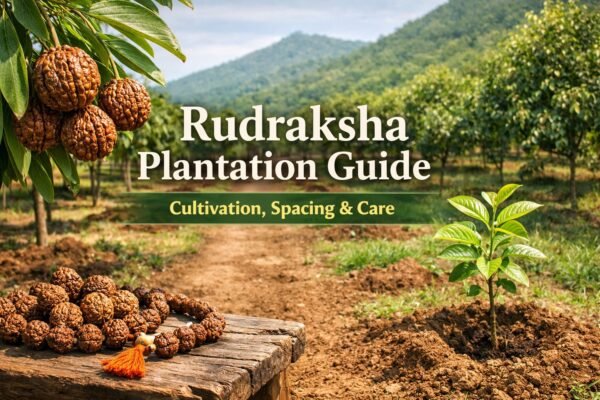
Rudraksha plantation is becoming one of the most valuable long-term agricultural practices in India and other tropical regions. The Rudraksha tree (Elaeocarpus ganitrus) is well known for producing sacred Rudraksha beads, which are widely used for spiritual, medicinal, and religious purposes. Due to the increasing demand for authentic Rudraksha, many farmers and landowners are now interested in Rudraksha cultivation as a profitable plantation crop.
However, Rudraksha farming is not like regular seasonal farming. It is a long-term plantation investment. The success of a Rudraksha plantation depends on proper land preparation, soil selection, spacing, irrigation planning, plant care, and pest control. In this guide, you will learn everything about how to start Rudraksha plantation, including the best climate, soil requirements, planting methods, irrigation schedule, fertilizer plan, and maintenance tips.
What is Rudraksha Plantation?
Rudraksha plantation means growing Rudraksha trees on a farm or agricultural land in an organized manner. Unlike growing a single Rudraksha plant at home, plantation farming requires a proper layout and systematic planning so that trees can grow healthily and produce good quality fruits and seeds (Rudraksha beads).
Rudraksha trees can grow large in size, and they require enough sunlight, airflow, and nutrients. Therefore, plantation spacing and long-term management play a major role in determining future yield.
Benefits of Rudraksha Cultivation
Rudraksha cultivation offers both spiritual and commercial benefits. Some major advantages include:
-
High demand for authentic Rudraksha beads in India and abroad
-
Low maintenance once the trees become mature
-
Long lifespan and continuous production for many years
-
Suitable for agroforestry and mixed plantation models
-
Can be grown as an investment crop for future income
Many farmers prefer Rudraksha farming because it can generate returns for decades if managed properly.
Best Climate for Rudraksha Plantation
The Rudraksha tree grows best in tropical and subtropical climates. It prefers warm weather with moderate to high humidity. The plant naturally grows in regions like Nepal, Indonesia, and certain parts of India where rainfall is good and temperature remains moderate.
Ideal Climate Conditions:
-
Temperature range: 18°C to 35°C
-
Humid environment with good rainfall
-
No heavy frost or extreme cold conditions
-
Moderate sunlight with some shade for young plants
Young Rudraksha saplings are sensitive, so they should be protected from harsh sunlight and extreme cold during early growth stages.
Best Soil for Rudraksha Farming
Soil quality is one of the most important factors in Rudraksha plantation. The plant grows well in well-drained soil rich in organic matter. Waterlogging is harmful and can lead to root rot.
Recommended Soil Type:
-
Sandy loam soil
-
Red soil with organic compost
-
Well-drained fertile soil
Soil pH Range:
-
pH between 6.0 to 7.5 is ideal
If your land has clay soil, it is important to improve drainage by mixing sand, compost, and farmyard manure.
How to Start Rudraksha Plantation (Step-by-Step)
Starting a Rudraksha plantation requires proper planning. Below is a simple step-by-step method that farmers can follow.
Step 1: Select Land and Prepare Layout
Choose a land area that receives sunlight and has good drainage. Avoid low-lying areas where water stays after rainfall. Plan the layout in a square or rectangular format for easy movement and irrigation.
It is best to mark plantation lines using ropes and poles so that spacing remains accurate.
Step 2: Rudraksha Plantation Spacing
Spacing is very important because Rudraksha trees grow into large canopy trees. If trees are planted too close, they compete for sunlight and nutrients, reducing growth and yield.
Recommended Spacing Options:
-
10 ft × 10 ft (high density plantation)
-
12 ft × 12 ft (recommended for most farmers)
-
15 ft × 15 ft (low density but better growth)
For commercial Rudraksha plantation, 12 ft × 12 ft spacing is usually the best option because it provides balance between plant population and canopy growth.
Step 3: Digging Pits for Planting
Dig pits in the marked locations before planting. Pit size depends on soil type and land condition.
Pit Size:
-
45 cm × 45 cm × 45 cm (normal soil)
-
60 cm × 60 cm × 60 cm (hard soil)
Mix the dug soil with:
-
farmyard manure (FYM)
-
compost
-
neem cake (optional)
-
sand (if soil is heavy)
Allow pits to remain open for 10 to 15 days before planting to kill harmful insects and pathogens naturally.
Step 4: Choosing Seeds or Saplings
Rudraksha can be grown through seeds or saplings.
Growing from Seeds:
-
Takes longer time
-
Germination may be slow
-
Requires careful nursery management
Growing from Saplings:
-
Faster growth
-
Higher survival rate
-
Recommended for plantation farming
For large-scale Rudraksha plantation, it is always better to use healthy saplings from a trusted source.
Step 5: Best Time for Planting Rudraksha
The best season for Rudraksha plantation is during the beginning of the monsoon. This helps the plant establish roots naturally with good moisture availability.
Best Planting Seasons:
-
June to August (monsoon plantation)
-
February to March (spring plantation with irrigation)
Avoid planting during extreme summer heat or winter frost conditions.
Irrigation Requirements for Rudraksha Plantation
Watering is essential in the first few years. Mature Rudraksha trees become drought tolerant, but young plants need regular irrigation.
Irrigation Schedule:
-
First 3 months: water 2–3 times per week
-
First year: water once or twice weekly depending on soil
-
Second year onward: irrigation only in dry periods
Drip irrigation is highly recommended for Rudraksha plantation because it saves water and delivers moisture directly to roots.
Manure and Fertilizer for Rudraksha Cultivation
Rudraksha trees respond well to organic manure. Chemical fertilizers can be used, but organic farming methods are better for long-term soil health.
Organic Manure Recommendation:
-
Apply 5–10 kg FYM per plant every year
-
Add compost during monsoon and post-monsoon
Fertilizer Suggestion (optional):
-
Use balanced NPK in small quantities
-
Increase dose gradually as tree grows
Avoid excessive nitrogen fertilizer, as it may lead to more leaf growth but weaker fruiting.
Mulching and Weed Control
Mulching is important for conserving soil moisture and controlling weeds. Apply dry leaves, straw, or organic mulch around the plant base.
Mulching Benefits:
-
Prevents moisture loss
-
Reduces weed growth
-
Improves soil fertility slowly
-
Protects roots from heat
Keep mulch 5–6 inches away from the trunk to avoid fungal infection.
Pruning and Training of Rudraksha Trees
Pruning is essential for shaping the plant and improving air circulation. Remove weak branches and keep the main stem strong.
Pruning Tips:
-
Remove dead or diseased branches yearly
-
Shape the tree canopy for sunlight penetration
-
Avoid heavy pruning during flowering season
Proper pruning improves plant health and increases fruiting chances.
Pest and Disease Management
Rudraksha trees are generally hardy but may suffer from pests like aphids, scale insects, or fungal infections in humid conditions.
Common Problems:
-
Leaf yellowing due to waterlogging
-
Root rot in poor drainage soil
-
Sap-sucking pests
Prevention Methods:
-
Maintain proper spacing
-
Avoid overwatering
-
Use neem oil spray if pests appear
-
Remove infected leaves and branches
Good plantation hygiene reduces most disease issues.
How Long Does Rudraksha Take to Produce Fruits?
Rudraksha is a long-term crop, so patience is required. Fruiting depends on climate, variety, and plantation care.
Fruiting Timeline:
-
Some trees may start fruiting in 4 to 5 years
-
Full production may take 7 to 10 years
-
Mature trees can produce for decades
Once the tree becomes mature, it can continue producing fruits every year.
Rudraksha Harvesting and Processing
Harvesting is done when fruits mature. The Rudraksha beads are inside the fruit seed.
Harvesting Steps:
-
Collect mature fruits from the tree
-
Remove outer pulp by soaking or washing
-
Dry the seeds under sunlight
-
Clean and store in a dry place
Proper drying is important to prevent fungal growth on beads.
Frequently Asked Questions (FAQs)
1. Which is the best spacing for Rudraksha plantation?
12 ft × 12 ft is ideal for most farmers. It provides good airflow and space for canopy growth.
2. Can Rudraksha grow in all parts of India?
It grows best in tropical and humid areas. Regions with extreme frost may not be suitable.
3. Is Rudraksha farming profitable?
Yes, Rudraksha cultivation can be profitable in the long term due to high market demand, but it requires patience.
4. Can Rudraksha be grown in pots?
Yes, but plantation-scale cultivation requires open land for better yield.
5. How often should Rudraksha plants be watered?
Young plants need regular watering. Mature trees need watering only during dry periods.
Conclusion
Rudraksha plantation is a promising long-term agricultural investment for farmers and landowners who want to grow a high-value spiritual crop. With proper planning, correct spacing, well-drained soil, irrigation management, and regular pruning, Rudraksha farming can provide sustainable income for many years.
If you want successful Rudraksha cultivation, focus on healthy saplings, correct plantation layout, and consistent care during the early years. Once the trees are established, maintenance becomes easier and the plantation can provide strong long-term returns.