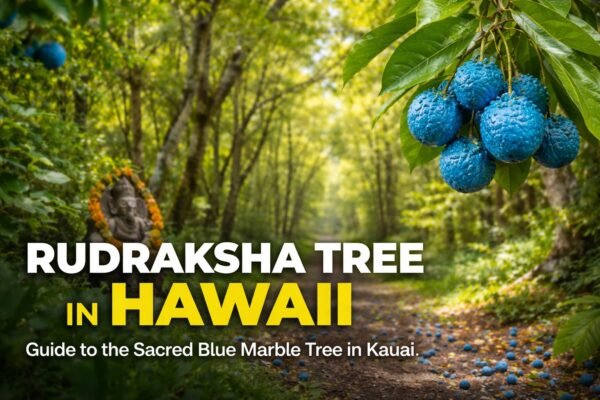
The Rudraksha tree in Hawaii has become one of the most fascinating spiritual and botanical attractions in the United States. Many people are surprised to learn that these sacred trees, traditionally associated with Nepal, India, and Indonesia, also grow in Hawaii—specifically on the island of Kauai.
Whether you are searching for the Sacred Rudraksha Forest, wondering if you can collect beads, or simply curious about how this tree thrives in Hawaii’s climate, this comprehensive guide explains everything in detail.
Does Rudraksha Grow in Hawaii?
Yes, Rudraksha trees grow in Hawaii. The most famous grove is located on the island of Kauai and is widely known as the Sacred Rudraksha Forest. It is often described as the only large Rudraksha grove in the Western Hemisphere.
The trees cultivated there belong to the Elaeocarpus genus, commonly associated with Rudraksha-producing species. Hawaii’s tropical climate—warm temperatures, high humidity, and consistent rainfall—makes it suitable for growing these trees.
Where to See the Rudraksha Tree in Hawaii
Sacred Rudraksha Forest – Kauai
When people search for “Rudraksha tree in Hawaii,” they are typically referring to the Sacred Rudraksha Forest on Kauai. The grove is associated with a Hindu monastery and serves as a peaceful meditation and pilgrimage site.
Visitors describe the forest as calm, quiet, and spiritually uplifting. The trees form a beautiful canopy, and during fruiting season, blue-colored fruits can often be seen either on the branches or fallen on the ground.
Because of its uniqueness, the grove attracts:
-
Spiritual seekers
-
Yoga practitioners
-
Nature enthusiasts
-
Botanists
-
Tourists exploring Kauai
It is considered a sacred space, so respectful behavior is expected when visiting.
Why Is It Called the “Blue Marble Tree”?
The Rudraksha tree is sometimes called the “Blue Marble Tree” because of its distinctive fruit.
Fruit Characteristics:
-
Round shape
-
Bright cobalt-blue outer skin when ripe
-
Marble-like appearance
-
Contains a hard seed inside
After the fruit dries and the pulp is removed, the inner seed becomes what is known as a Rudraksha bead.
The vibrant blue fruit makes the tree easy to recognize during fruiting season and is one of the most striking visual features of the Rudraksha tree in Hawaii.
Botanical Identification of the Rudraksha Tree
The Rudraksha tree belongs to the Elaeocarpus genus. Here are the key features that help identify it:
1. Height and Structure
-
Can grow 40–80 feet tall
-
Straight trunk
-
Spreading canopy
-
Evergreen foliage
2. Leaves
-
Glossy green
-
Oval to oblong shape
-
Smooth edges
-
Often turn reddish before falling
3. Flowers
-
Small white flowers
-
Bell-shaped
-
Grow in clusters
4. Fruit
-
Blue outer skin when ripe
-
Contains a textured inner seed
-
Seeds have natural vertical lines known as “mukhis”
Is the Hawaiian Rudraksha the Same as Nepal or Indian Rudraksha?
This is one of the most common questions.
The Rudraksha trees in Hawaii are closely related to traditional Rudraksha-producing trees found in Nepal, India, and Indonesia. However, botanical naming can vary depending on classification systems and species grouping.
While the genus remains consistent (Elaeocarpus), environmental factors such as soil, rainfall, and temperature can influence:
-
Bead size
-
Surface texture
-
Mukhi definition
-
Overall appearance
Regional differences do not automatically determine spiritual value, but collectors and practitioners often distinguish beads by origin.
Can You Collect Rudraksha from the Ground in Hawaii?
Many visitors hope to collect fallen Rudraksha fruits or seeds. However, there are important considerations:
1. Respect the Sacred Space
The grove is considered spiritually significant. Visitors should not damage trees or disturb the environment.
2. Agricultural Regulations
Hawaii has strict agricultural and biosecurity laws. Transporting plant material (including seeds) off the island may be restricted.
Before attempting to carry Rudraksha seeds to another state or country, always verify current agricultural regulations. Failure to comply may result in confiscation or penalties.
Climate Conditions That Allow Rudraksha to Grow in Hawaii
Hawaii’s environment closely resembles tropical regions where Rudraksha naturally grows.
Ideal Conditions:
-
Warm year-round temperatures
-
High humidity
-
Well-draining soil
-
Regular rainfall
-
Frost-free climate
Kauai’s natural ecosystem provides these conditions, which is why the Rudraksha tree thrives there.
Can You Grow a Rudraksha Tree in Hawaii?
Yes, it is possible to grow a Rudraksha tree in Hawaii if conditions are suitable.
Basic Growing Requirements:
Sunlight:
Full sun to partial shade.
Water:
Regular watering when young. Mature trees tolerate moderate dry periods but prefer consistent moisture.
Soil:
Rich, well-draining soil with organic matter.
Spacing:
Because the tree grows tall, it needs adequate vertical and horizontal space.
Time to Fruit:
Under favorable conditions, fruiting may begin in approximately 3–4 years, though this varies.
Growing from seed requires patience. Germination can take several weeks to months depending on seed preparation.
Spiritual Significance of Rudraksha
Rudraksha beads hold deep importance in Hindu spiritual traditions, especially within Shaivism.
They are traditionally:
-
Worn as malas (prayer beads)
-
Used for mantra meditation
-
Believed to support focus and spiritual discipline
The word “Rudraksha” is derived from Sanskrit:
-
“Rudra” – a name of Lord Shiva
-
“Aksha” – meaning tear
The beads are symbolically associated with divine compassion and spiritual protection.
The presence of Rudraksha trees in Hawaii has therefore created a unique spiritual landmark in the Western world.
Best Time to Visit the Rudraksha Forest in Kauai
While the forest can be visited throughout the year, fruiting season typically makes the experience more visually striking.
During fruiting season:
-
Blue fruits are visible on branches
-
Fallen fruits may be seen on the ground
-
The grove feels especially vibrant
It is always recommended to check visiting hours and local guidelines before planning a trip.
Differences Between Rudraksha Tree and Other Elaeocarpus Species
Not all Elaeocarpus trees produce traditional Rudraksha beads used for spiritual purposes.
Differences may include:
-
Fruit color variations
-
Seed structure
-
Surface texture
-
Mukhi formation
Proper identification is important for collectors and growers.
Conservation and Respect for Sacred Sites
The Sacred Rudraksha Forest in Hawaii is more than a botanical curiosity—it is a spiritual landmark.
Visitors should:
-
Avoid damaging trees
-
Avoid removing large quantities of seeds
-
Follow local agricultural laws
-
Maintain silence and respect
Preserving the grove ensures future generations can experience this rare forest.
Frequently Asked Questions
Which Hawaiian island has Rudraksha trees?
Kauai is the most well-known island where Rudraksha trees grow in a dedicated grove.
Why are Rudraksha fruits blue?
The outer fruit layer contains natural pigments that produce a bright cobalt-blue color when ripe.
Are Rudraksha trees native to Hawaii?
No. They are not native but grow successfully due to Hawaii’s favorable tropical climate.
Can tourists take Rudraksha seeds home?
Transporting seeds may be restricted due to agricultural regulations. Always verify current laws before travel.
How tall does a Rudraksha tree grow?
It can grow between 40 and 80 feet depending on conditions.
Is the Rudraksha forest open year-round?
Generally yes, but visiting hours may vary. Confirm before visiting.
Final Thoughts
The Rudraksha tree in Hawaii represents a rare meeting of tropical ecology and ancient spiritual heritage. Growing far from its traditional Himalayan origins, it has found a thriving home in Kauai’s warm and humid climate.
For travelers, it offers a peaceful and unique experience. For botanists, it presents an example of successful tropical cultivation. For spiritual seekers, it symbolizes sacred continuity across continents.
Whether you are visiting the Sacred Rudraksha Forest, researching botanical characteristics, or exploring the cultural significance of Rudraksha, Hawaii provides one of the most remarkable places in the Western world to encounter this sacred tree.