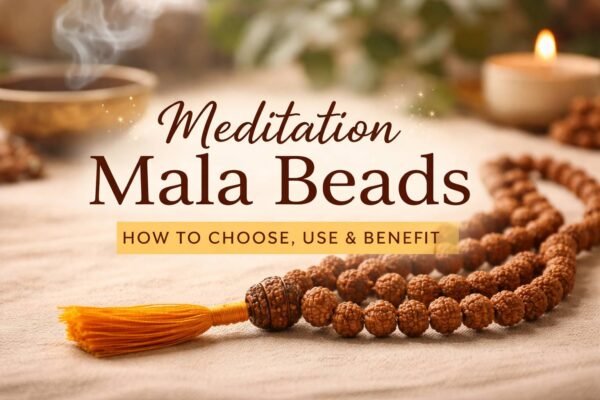
Meditation mala beads are more than a beautiful necklace—they’re a practical tool for keeping your mind anchored during meditation. Each bead becomes a gentle “checkpoint” for your breath, mantra, or intention, helping you stay present when the mind wants to wander. Traditional malas most commonly contain 108 beads, plus a guru bead that marks the start and end of a round of practice.
If you’re looking to buy a mala for daily meditation, choosing the right material, bead size, and stringing quality matters just as much as the spiritual meaning behind it. This guide will walk you through how mala beads work, how to use them correctly, and how to choose an authentic mala—especially if you’re considering a rudraksha meditation mala.
What Are Meditation Mala Beads?
A mala is a strand of beads traditionally used in meditation and prayer for counting repetitions—usually of a mantra (often called japa). Instead of checking a timer or counting in your head, you move bead by bead with your fingers. This creates a steady rhythm that makes concentration easier and meditation more consistent.
Malas are used across spiritual traditions, and they’re commonly made from natural materials like rudraksha, sandalwood, tulsi, or gemstones. The best mala is the one you’ll actually use every day—one that feels comfortable in your hand and supports your intention.
Why Do Mala Beads Have 108 Beads?
The number 108 is considered sacred in many Indian spiritual traditions. Practically, 108 repetitions is also long enough to settle the mind into a deeper rhythm without feeling endless.
A traditional mala includes:
-
108 counting beads
-
1 guru bead (the “marker” bead you don’t cross)
-
Optional tassel or spacer beads
Benefits of Using Mala Beads for Meditation
1) Better focus (less mind-wandering)
When your fingers are moving bead to bead, attention naturally stays grounded. You’ll notice distractions sooner and return to the mantra faster.
2) Consistency in practice
A mala creates a repeatable routine: one mala round can become your “minimum daily practice,” even on busy days.
3) Mantra meditation becomes easier
For japa, you don’t need to track numbers mentally. You simply move one bead per repetition.
4) A physical reminder of your intention
Many people wear a mala after practice as a reminder to carry calm, discipline, or devotion through the day.
Note: Mala beads support mindfulness and spiritual practice. They are not a substitute for medical care or mental health treatment.
How to Use Mala Beads for Meditation (Step-by-Step)
Step 1: Choose your mantra or intention
Examples:
-
A mantra like “Om Namah Shivaya”
-
A simple phrase like “I am calm” or “I am focused”
-
Even breath counting works: one bead per inhale/exhale cycle
Step 2: Sit comfortably and hold the mala correctly
-
Hold the mala in one hand and let it drape naturally.
-
Traditionally, you move the beads using your thumb, one bead at a time.
Step 3: Start next to the guru bead (don’t start on it)
Begin on the bead immediately next to the guru bead. That’s your first count.
Step 4: Repeat and move
With each repetition:
-
Say the mantra (silently or softly)
-
Move to the next bead
Step 5: When you reach the guru bead again
You’ve completed one full round of 108.
-
Pause for a moment.
-
If you want to continue, do not cross the guru bead. Simply turn the mala around and go the opposite direction.
Rudraksha Meditation Mala Beads: Why Many Practitioners Prefer Them
A rudraksha mala is popular for meditation because rudraksha is traditionally associated with Shiva sadhana and disciplined japa. Many seekers choose rudraksha malas for their grounding feel and traditional significance.
What to look for in a good rudraksha mala
-
Natural, well-defined mukhi lines (faces)
-
Clean drilling (no cracking around the hole)
-
Strong thread and proper knotting between beads
-
Comfortable bead size for your hand (commonly 5–8 mm for daily japa)
If you’re shopping online, authenticity matters. Genuine rudraksha is frequently imitated, so choose a seller who is transparent about sourcing and verification.
How to Choose the Right Meditation Mala (Quick Checklist)
Choose by practice style
-
Mantra (japa): 108-bead mala is ideal
-
Short daily practice: consider a 54-bead mala (two rounds = 108)
-
On-the-go: wrist mala (usually 27 beads)
Choose by material
-
Rudraksha: traditional, grounding, widely used for japa
-
Sandalwood/tulsi: lightweight, aromatic, calming
-
Gemstones: chosen for personal symbolism (love, clarity, protection)
Choose by comfort
-
Bead size should feel easy to grip.
-
The mala should glide smoothly—no sharp edges, no rough knots.
How to Care for Your Mala Beads
To keep your meditation mala beads in good condition:
-
Store them in a clean pouch or safe place
-
Avoid perfumes/harsh chemicals on natural beads
-
If your mala is rudraksha, follow a gentle cleaning routine and keep it dry after exposure to sweat/water
-
Treat it like a practice tool—not something to throw into a random drawer
Are mala beads religious?
They come from spiritual traditions, but many people use them in a simple mindfulness way—like a physical counter for breath or affirmations.
Can beginners use mala beads?
Yes. In fact, malas are ideal for beginners because the beads give your mind something consistent to “do,” which reduces restlessness.
What is the guru bead?
The guru bead marks the beginning and end of your round. Traditionally you don’t cross it—when you reach it, you pause or reverse direction.
How many times should I use my mala each day?
Start with one round (108) or even 10 minutes daily. Consistency matters more than intensity.
Can I wear my meditation mala all day?
Many people do. If you wear it, make sure it’s comfortable and treated respectfully (especially with natural rudraksha).
If you’re looking for a mala you can genuinely use every day, choose meditation mala beads that feel good in your hand, are properly strung, and come from a trusted source. Explore our authentic rudraksha malas and guides to help you choose the right bead size and mukhi for your practice.