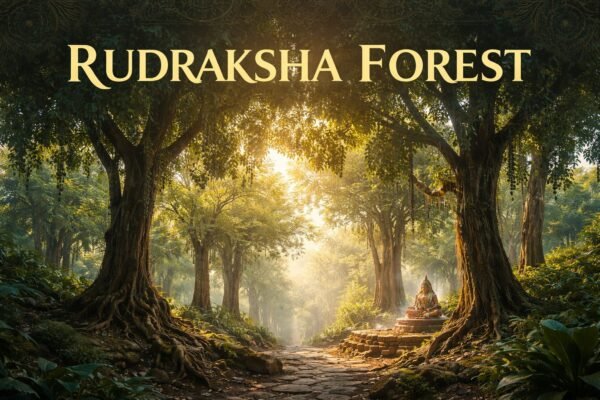
The Rudraksha Forest is a sacred natural grove known for its deep spiritual, cultural, and botanical importance. Most famously associated with Rudraksha Forest Kauai, this unique forest is home to rare Elaeocarpus ganitrus trees, the source of Rudraksha beads that have been revered in Hindu traditions for thousands of years.
Rudraksha seeds are believed to have originated from the tears of Lord Shiva, making the forest not just a natural habitat but a powerful spiritual landmark for seekers, meditators, and devotees around the world.
What Makes the Rudraksha Forest Sacred
Unlike ordinary forests, the Sacred Rudraksha Forest holds spiritual value due to the presence of naturally grown Rudraksha trees. These trees are traditionally associated with peace, meditation, and higher consciousness.
Many visitors describe the forest as calm and energetically uplifting, making it an ideal space for silent reflection and spiritual practices. The natural environment supports mindfulness, allowing people to reconnect with nature and inner awareness.
History of Rudraksha Forest
The modern Rudraksha Forest, especially the one in Kauai, was developed with the intention of preserving sacred Rudraksha trees outside their native Himalayan region. Spiritual monks and devotees planted these trees decades ago to create a sanctuary dedicated to meditation and devotion.
Today, the forest stands as one of the rare places where Rudraksha trees thrive naturally outside India, symbolizing the global spread of ancient spiritual traditions.
Rudraksha Tree and Its Spiritual Significance
The Rudraksha tree (Elaeocarpus ganitrus) produces blue-colored fruits containing seeds with natural lines known as mukhis. Each mukhi carries specific spiritual and astrological significance.
In Hindu scriptures, Rudraksha beads are believed to:
-
Calm the mind
-
Support meditation and focus
-
Balance energy
-
Provide spiritual protection
The forest represents the living origin of these sacred beads, giving visitors a deeper understanding of their true essence.
Botanical Importance of the Rudraksha Grove
From a botanical perspective, the Rudraksha Forest is equally significant. The trees require specific climatic conditions and take several years to mature. Their successful growth in forest groves highlights careful preservation and sustainable cultivation practices.
The presence of mature Rudraksha trees allows visitors to witness the full life cycle of the bead, from fruit to seed, enhancing appreciation for its natural origin.
Meditation and Spiritual Practices
The peaceful environment of the Rudraksha Forest makes it ideal for:
-
Silent meditation
-
Spiritual contemplation
-
Walking meditation
-
Chanting or prayer
Many practitioners believe meditating near Rudraksha trees enhances spiritual awareness and inner balance.
Visiting the Rudraksha Forest
Visitors can expect a serene, well-preserved natural setting with walking paths and quiet spaces for reflection. The forest is respected as a spiritual site, and visitors are encouraged to maintain silence and mindfulness during their visit.
It is not a commercial tourist attraction but a place meant for spiritual connection and reverence.
Why the Rudraksha Forest Is More Than a Tourist Spot
The Rudraksha Forest is not just about seeing rare trees; it represents the connection between nature and spirituality. It reminds visitors of ancient wisdom that teaches harmony between human life, the natural world, and spiritual growth.
For anyone seeking peace, knowledge, or spiritual depth, the Rudraksha Forest offers an experience that goes beyond physical beauty.
Conclusion
The Rudraksha Forest stands as a sacred reminder of the spiritual power found in nature. From its ancient roots in Hindu tradition to its peaceful modern presence, the forest continues to inspire devotion, meditation, and inner transformation.
Whether you are interested in the spiritual significance of Rudraksha trees or simply seeking a calm and meaningful natural environment, the Rudraksha Forest remains a truly unique and powerful destination.