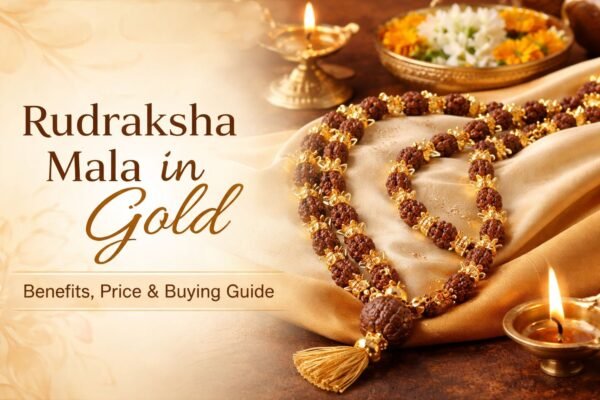
A Rudraksha mala in gold is more than an ornament—it’s a sacred combination of spiritual tradition and fine craftsmanship. Rudraksha beads are traditionally worn for japa (mantra chanting), meditation, and daily grounding, while gold is valued for purity, durability, and auspiciousness. When you bring them together—whether as 22K gold wire work, gold caps, or a rudraksha mala gold chain style—you get a piece that looks premium, lasts longer, and stays suitable for both spiritual use and everyday wear.
At Mukhi Rudraksha, our focus is simple: help you choose a gold Rudraksha mala that is authentic, well-made, and comfortable to wear, with clear guidance so you can buy with confidence.
What exactly is a “gold Rudraksha mala”?
People use the phrase in a few different ways. Knowing the difference helps you compare products correctly:
-
Rudraksha mala with gold capping
Each bead has a gold cap (or gold-toned cap) placed on one or both sides. This improves appearance and protects drilling points from wear. -
Rudraksha mala in gold wire (designer style)
Beads are linked using gold wire or gold elements between beads. This is typically seen in premium, high-ticket designs. -
Rudraksha mala gold chain (jewelry finish)
A chain-like build with Rudraksha beads spaced between gold links or gold accents—ideal for people who want a “spiritual jewelry” look.
When you compare options online, always check whether it is real gold (e.g., 22K), gold-plated, or gold-toned metal. This single detail changes the value, durability, and resale potential significantly.
Why devotees choose Rudraksha + Gold together
A gold Rudraksha mala is often chosen for three practical reasons:
-
Daily wear durability: Gold components (especially solid gold) resist rust and stay comfortable on the skin with proper care.
-
Auspicious gifting: Gold is traditionally considered shubh (auspicious), making it popular for birthdays, anniversaries, and spiritual milestones.
-
A premium look without losing spiritual purpose: Many seekers want something that works for japa and also complements formal wear.
Choosing the right type of Rudraksha for a gold mala
Most buyers start with these popular bead choices:
Panchmukhi (5 Mukhi) Rudraksha
Often preferred for general well-being and everyday spiritual practice. If you’re buying your first gold Rudraksha mala, a 5 Mukhi option is a common starting point because it’s widely used for regular japa and meditation.
Other Mukhi options (for specific preferences)
Some people choose specific mukhi types based on tradition, personal faith, or guidance. If you’re unsure, keep it simple: choose authentic beads first, then upgrade to specialized combinations later.
Tip: Whatever mukhi you choose, authenticity matters more than fancy caps. A genuine, properly drilled and strung mala will feel better in daily practice.
22K gold vs gold-plated: what you should know before buying
22K Gold Rudraksha Mala
-
Higher intrinsic value
-
Better long-term durability
-
Typically used in premium designs (gold wire work, high-quality caps, strong clasps)
Gold-plated / gold-toned Rudraksha Mala
-
More affordable
-
Looks attractive, but plating can fade with sweat, perfume, and daily friction
-
Best for occasional wear or gifting on a budget
If your goal is a “lifetime piece,” choose 22K (or at least clearly hallmarked gold components). If your goal is “spiritual + stylish” at a lower price, gold-plated can work—just care for it gently.
Price factors: why gold Rudraksha malas vary so much
When customers search “rudraksha mala in gold price,” they often see a big range. That’s normal. Pricing usually depends on:
-
Gold purity and weight (22K pieces cost more than plated items)
-
Number of beads (108+1 is common for japa; shorter necklaces cost less)
-
Bead size and quality (uniformity, surface, drilling, finish)
-
Craftsmanship (wire work, caps, spacers, clasps, finishing)
-
Certification and verification (authentic sourcing + documentation increases trust)
-
Customization (length, bead size, clasp style, spacing)
How to check authenticity (quick buyer checklist)
Before you buy a Rudraksha mala in gold, confirm these points:
-
Clear bead photos (front, side, close-up of mukhi lines)
-
Uniform drilling and clean threading (no cracks around holes)
-
Comfortable spacing (beads should not pinch skin or pull hair)
-
Disclosure of materials (22K / 18K / plated—should be stated clearly)
-
Return/exchange clarity (especially important for jewelry)
If a seller is vague about gold purity or avoids close-up images, treat that as a red flag.
How to wear a gold Rudraksha mala (daily wear tips)
-
Wear it so it sits comfortably—too tight causes friction; too loose swings and can chip beads.
-
Avoid spraying perfume directly on the mala. Apply fragrance first, let it dry, then wear.
-
Remove before swimming or using harsh soaps (especially if it’s gold-plated).
-
If you use the mala for japa, keep one dedicated “practice mala” if your gold piece is heavy or delicate, and wear the gold mala as your daily spiritual jewelry.
Care instructions: keep your mala looking premium for years
-
Wipe gently with a soft, dry cloth after use.
-
Store in a clean pouch/box (separate from sharp jewelry that can scratch gold).
-
Keep away from harsh chemicals and constant water exposure.
-
If your mala includes gold-plated parts, avoid aggressive polishing (it can remove plating).
Frequently Asked Questions (FAQs)
1) Is a gold Rudraksha mala suitable for daily wear?
Yes—especially if it is well-constructed and uses quality components. 22K gold parts generally last longer than plated components with daily wear.
2) Which is better: gold capping mala or gold wire mala?
Gold capping is a great balance of durability and budget. Gold wire malas are usually premium, heavier, and more jewelry-like.
3) Can I use a gold Rudraksha mala for japa?
Yes. Many people use 108+1 malas for japa. If your gold mala is heavy, you can keep it for wearing and use a lighter japa mala for long sessions.
4) Does gold affect the spiritual purpose of Rudraksha?
Traditionally, Rudraksha is valued for spiritual practice; gold is often chosen for auspiciousness and durability. The key is authenticity and respectful use.
5) How do I know if it’s real 22K gold?
Look for hallmarking/marking (where applicable), transparent gold weight disclosure, and reliable documentation from the seller.
6) What bead count should I choose?
For chanting practice, 108+1 is most common. For a necklace style, shorter counts or spaced-bead chain styles are popular.
7) Is gold-plated a good option?
It can be—if you want the look at a lower price. Just expect plating to wear over time with heavy daily use.
8) Can I customize the length?
Many premium sellers offer length customization. It’s especially helpful if you want the mala to sit at a specific chest level.