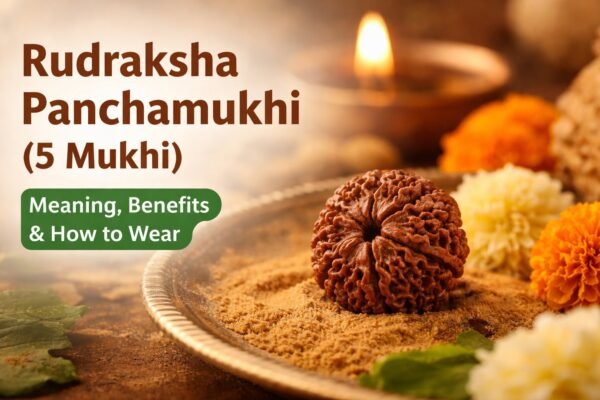
If you’re searching for rudraksha panchamukhi, you’re most likely looking for one clear answer: what is it, what does it do, and how do I wear an original bead correctly? Panchamukhi Rudraksha—also called 5 Mukhi Rudraksha—is among the most commonly worn and widely recommended Rudraksha types. It’s traditionally valued for creating balance in daily life, supporting a calmer mind, and strengthening spiritual discipline.
In this complete guide, you’ll learn the meaning and significance of Panchamukhi Rudraksha, its traditional benefits, who can wear it, how to wear it correctly, rules and care, and a practical checklist to identify an original Panchamukhi Rudraksha before you buy.
Note: Rudraksha is a sacred, traditional spiritual item. Benefits are described as per traditional belief and common practice. It is not a substitute for medical care.
What is Panchamukhi Rudraksha?
Panchamukhi means “five-faced.” A Panchamukhi Rudraksha bead naturally has five distinct lines (mukhis/faces) running from top to bottom. These faces are not carved—they appear naturally as the seed forms.
In many traditions, Panchamukhi Rudraksha is associated with Kalagni Rudra, and it’s considered a generally safe, universal Rudraksha that can be worn by most people—students, professionals, householders, and spiritual seekers.
Panchamukhi Rudraksha meaning and spiritual significance
Rudraksha is deeply linked with Lord Shiva in Hindu tradition. The Panchamukhi bead is commonly worn for steadiness, discipline, and a balanced inner state—especially for those trying to remain calm under pressure and maintain focus in everyday life.
Many practitioners also connect “five-faced” symbolism with the idea of balancing one’s inner tendencies and improving clarity of thought—helpful for chanting, meditation, prayer, and steady routines.
Panchamukhi Rudraksha benefits (traditional)
Below are benefits commonly described in traditional Rudraksha literature and practice. Results vary from person to person and depend on faith, lifestyle, and consistency.
1) Calmer mind and emotional steadiness
Many wearers describe Panchamukhi Rudraksha as supportive for maintaining calmness, reducing overthinking, and staying emotionally grounded—especially during demanding routines.
2) Better focus for study, work, and meditation
Because it is often worn daily (not only during rituals), 5 Mukhi is popular among students and professionals who want improved concentration and disciplined habits.
3) Support for spiritual growth
Panchamukhi Rudraksha is frequently used in japa malas and daily sadhana. It is believed to help one remain consistent with prayer, mantra chanting, and meditation practices.
4) Protection and positivity (belief-based)
In many communities, Rudraksha is traditionally worn as a protective spiritual symbol—believed to help keep negativity away and encourage a positive mindset.
5) Suitable for most people
Compared to rare mukhis, Panchamukhi is widely considered beginner-friendly and wearable by men and women across ages (with basic respect and care).
Who should wear Rudraksha Panchamukhi?
Panchamukhi Rudraksha is commonly recommended for:
-
Students who want focus and memory support (traditional belief)
-
Working professionals managing stress and deadlines
-
Meditation practitioners seeking routine and stability
-
People starting their spiritual journey who want a generally safe Rudraksha
-
Anyone wanting a daily-wear bead (pendant, mala, or bracelet)
Who should be careful?
Rudraksha is generally safe to wear, but you may choose to be more mindful if:
-
You have skin sensitivity (use proper capping, clean thread/metal, keep bead oiled lightly)
-
You want very specific astrological or tantric prescriptions (consult a qualified guide)
Panchamukhi Rudraksha: Nepal vs Indonesia/Java (what’s the difference?)
Many buyers get confused here. In the market, 5 Mukhi Rudraksha is commonly available from regions such as Nepal and Indonesia (often called Java).
A simple way to understand it:
-
Nepal origin: typically larger beads; many people prefer them for a bold look and traditional feel.
-
Indonesia/Java origin: often smaller beads; commonly used for malas and lighter everyday jewelry styles.
When choosing, focus on authenticity, natural mukhi lines, and healthy seed structure rather than only origin.
How to wear 5 Mukhi Rudraksha (Panchamukhi): step-by-step
People wear Panchamukhi Rudraksha in three popular ways:
-
Pendant (single bead)
-
Bracelet (multiple beads)
-
Mala (108 beads or smaller counts)
Step 1: Decide the form (pendant, bracelet, or mala)
-
If you want daily wear with minimal maintenance, a pendant is easiest.
-
If you want constant contact and convenience, a bracelet is popular.
-
If you want chanting/japa, choose a mala.
Step 2: Clean and prepare it (simple traditional method)
-
Rinse gently with clean water.
-
Pat dry with a soft cloth.
-
Optionally apply a tiny amount of natural oil (like almond/olive) to prevent dryness (especially in dry climates).
Step 3: Choose thread/metal
-
Traditional options: cotton/silk thread or silver/gold/copper capping.
-
Practical tip: if you sweat a lot, capping helps protect the bead from constant friction and makes it easier to clean.
Step 4: When to start wearing
Many people start on an auspicious day (commonly Monday or Thursday) after morning bath and prayer. If you follow a family tradition, follow that.
Step 5: Mantra (optional but common)
If you chant mantras, you can wear it after a simple prayer and chanting your preferred Shiva mantra. The key is clean intention and consistency, not complicated ritual.
Panchamukhi Rudraksha wearing rules (do’s & don’ts)
These practical rules help preserve the bead and your wearing experience:
Do’s
-
Do keep it clean and dry after bathing.
-
Do oil it lightly if it becomes too dry or develops surface dryness.
-
Do store it safely if you remove it (clean cloth box/pouch).
-
Do handle it respectfully (it’s sacred to many traditions).
Don’ts
-
Don’t use harsh chemicals, perfume, or strong soap directly on the bead.
-
Don’t scrub aggressively with abrasive materials.
-
Don’t store it damp (mold risk).
-
Don’t buy beads with obvious drilling damage, broken seed structure, or fake carved lines.
How to identify an original Panchamukhi Rudraksha (authenticity checklist)
Because Panchamukhi is popular, it is also commonly imitated. Use this checklist before buying:
1) Natural mukhi lines (not carved)
-
The 5 lines should look organic, not artificially etched.
-
Carved lines often look too sharp, uniform, or “machine-made.”
2) Healthy bead structure
-
Avoid beads with deep cracks reaching the inner seed.
-
Minor surface texture can be natural, but structural damage reduces durability.
3) Correct drilling
-
The hole should be clean and centered (or sensibly placed), not broken.
-
Messy drilling can weaken the bead.
4) Size and feel
-
Authentic Rudraksha feels like a natural seed—textured, not plastic-like.
-
Extremely glossy “perfect” beads can be suspicious (unless properly capped/treated).
5) Ask for proof
If the seller claims “100% original,” ask for:
-
Clear macro photos of the bead (all sides)
-
Origin details (if available)
-
Lab test / X-ray / certification (if the brand offers it)
Buying tip: Choose sellers who show real photos, transparent policies, and support after purchase.
Care & maintenance: how to clean Panchamukhi Rudraksha at home
Good care can keep a bead wearable for years.
Monthly (or as needed)
-
Rinse with plain water.
-
Use a soft brush gently only if dirt is stuck in grooves.
-
Dry fully in shade (avoid harsh heat).
-
Apply a drop of natural oil and wipe excess.
If you see white residue
Sometimes soap residue gets into grooves. Clean gently and dry fully. If you suspect mold (thread-like growth), dry the bead properly and keep it in a low-humidity place.
Frequently Asked Questions (FAQ)
1) Can anyone wear Panchamukhi Rudraksha?
Traditionally, yes—5 Mukhi is considered suitable for most people.
2) Can I wear it daily?
Yes. Most wearers use it as a daily spiritual support bead.
3) Can women wear 5 Mukhi Rudraksha?
Yes, commonly worn by women as well.
4) Can I wear it while sleeping?
Many people do. If it feels uncomfortable, remove it at night and wear it again in the morning.
5) Can I wear it during travel or office work?
Yes, that’s one of the reasons it’s so popular—easy daily wear.
6) What is the best form: pendant or mala?
-
Pendant for simplicity
-
Mala for chanting and spiritual routine
-
Bracelet for convenience and constant wear
7) What is the Panchamukhi Rudraksha price range?
Price varies by origin, size, quality, and certification. Bigger, well-formed beads usually cost more.
8) How do I know my Rudraksha is working?
Many people report subtle changes first—calmness, steadier focus, improved routine. Experiences vary; consistency matters.