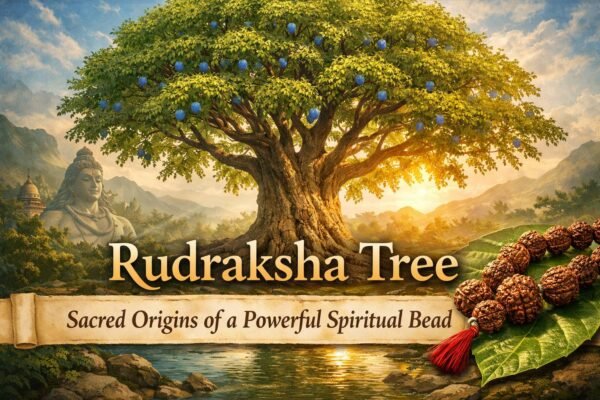
The Rudraksha tree holds a special place in Hindu and Vedic traditions. For centuries, seekers, yogis, and devotees have revered it as the divine source of Rudraksha beads—symbols of devotion, protection, and spiritual growth.
But what exactly is the Rudraksha tree? Where does it grow, and why is it considered sacred?
This guide explains everything in a simple, beginner-friendly way, helping you understand the tree behind one of the most respected spiritual beads in the world.
What Is the Rudraksha Tree?
The Rudraksha tree is a large evergreen tree scientifically known as Elaeocarpus ganitrus. It is best known for producing the seeds (beads) called Rudraksha, traditionally worn for spiritual practices.
Key Facts About the Rudraksha Tree
-
Botanical name: Elaeocarpus ganitrus
-
Grows in tropical and subtropical regions
-
Produces blue-colored fruits
-
The seed inside the fruit becomes a Rudraksha bead
Why Is the Rudraksha Tree Considered Sacred?
According to traditional Hindu belief, the Rudraksha tree is associated with Lord Shiva. The word Rudraksha comes from:
-
“Rudra” – another name for Lord Shiva
-
“Aksha” – meaning tears or eyes
Traditional belief says Rudraksha beads originated from Lord Shiva’s tears of compassion.
This belief makes the Rudraksha tree highly revered and respected in spiritual traditions.
Where Do Rudraksha Trees Grow Naturally?
The Rudraksha tree grows best in warm, humid climates.
Major Regions Where Rudraksha Trees Are Found
-
Nepal (famous for high-quality Rudraksha)
-
India (Himalayan regions, Assam, Arunachal Pradesh)
-
Indonesia (Java, Sumatra)
-
Parts of Southeast Asia
Each region produces Rudraksha beads with slightly different characteristics, according to traditional classifications.
How Do Rudraksha Beads Form on the Tree?
The process is completely natural:
-
The Rudraksha tree produces blue or purple fruits
-
Each fruit contains a hard seed
-
After drying and cleaning, the seed reveals natural lines called mukhis (faces)
-
These seeds are then used as Rudraksha beads
👉 The number of natural lines (mukhis) is important in traditional belief, not artificial carving.
Spiritual Significance of the Rudraksha Tree
From a spiritual perspective, the Rudraksha tree is believed to radiate calm and sattvic (pure) energy.
Traditional Beliefs Associated With the Rudraksha Tree
-
Encourages meditation and spiritual focus
-
Associated with devotion to Lord Shiva
-
Symbolizes protection and discipline
-
Considered supportive for spiritual seekers and householders alike
⚠️ Note: These are traditional and spiritual beliefs, not proven medical or scientific claims.
Common Myths About the Rudraksha Tree (Clarified)
❌ Myth: Rudraksha trees can grow anywhere
✔️ Truth: They need specific tropical conditions to grow properly.
❌ Myth: All Rudraksha beads are the same
✔️ Truth: Quality depends on origin, mukhi formation, and natural maturity.
❌ Myth: Rudraksha guarantees miracles
✔️ Truth: Rudraksha is traditionally believed to support spiritual practices, not guarantee outcomes.
How to Respect and Care for Rudraksha (Traditional View)
While the Rudraksha tree itself is sacred, beads made from it are treated with respect.
Traditional guidelines often include:
-
Keeping beads clean
-
Using them with intention and devotion
-
Avoiding disrespectful handling
(Practices may vary by tradition and belief system.)
Frequently Asked Questions (FAQ)
1. Is the Rudraksha tree rare?
Rudraksha trees are not extremely rare, but authentic, mature trees suitable for bead production are limited to specific regions.
2. How long does a Rudraksha tree take to bear fruit?
Traditionally, a Rudraksha tree may take 7–10 years to start producing fruits.
3. Can Rudraksha trees be grown at home?
They can be grown in suitable climates, but fruiting is not guaranteed outside natural regions.
4. Are Rudraksha beads linked to health benefits?
Any health-related benefits are based on traditional belief or spiritual perspective, not medical science.
5. How do I know if a Rudraksha is authentic?
Authenticity depends on natural mukhi formation, origin, and expert verification.
Conclusion: Understanding the Sacred Roots of Rudraksha
The Rudraksha tree is more than just a plant—it is the sacred source of one of the most spiritually significant beads in Vedic tradition. Understanding its origin helps deepen respect for Rudraksha and its role in spiritual life.
Whether you are a beginner, a spiritual seeker, or someone exploring authentic Rudraksha, knowledge is the first step toward meaningful practice.
👉 To explore authentic Rudraksha beads or learn more from trusted experts, visit:
🔗 Mukhi Rudraksha – Explore Authentic Rudraksha